
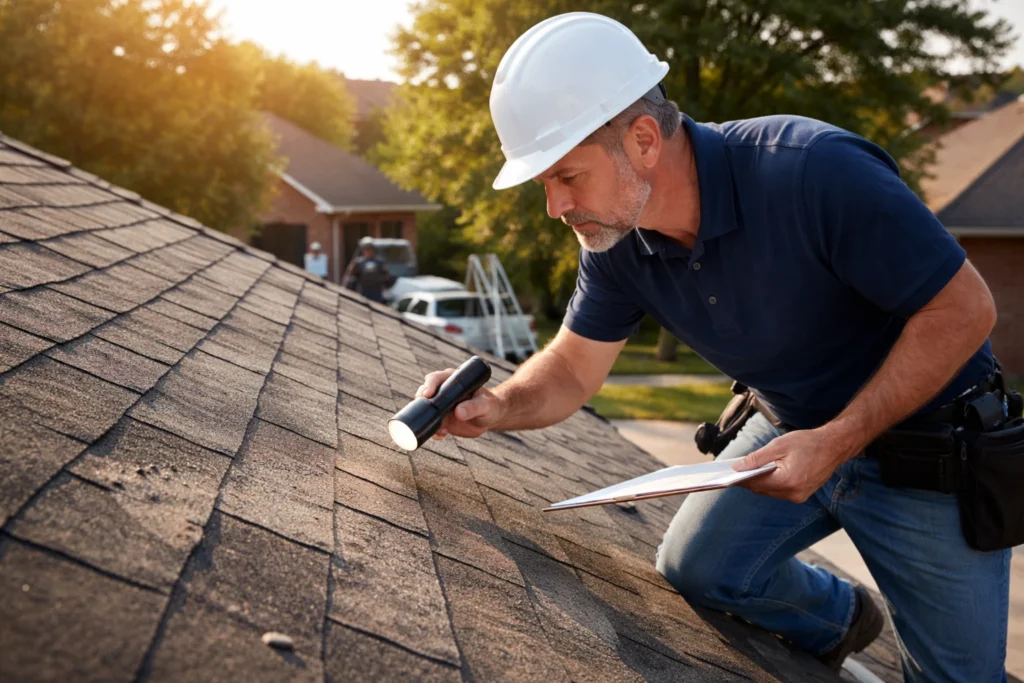
A hailstorm tears through Sherman at 2:14 a.m. The next morning, you spot granules in the gutter and a few bruised shingles. It looks minor. The insurance inspection feels routine. Then the estimate arrives — and it barely covers a partial repair. That’s the moment most homeowners start searching for a roofing public adjuster.
I’ve seen this pattern over and over in North Texas. The damage is real. The policy is valid. Yet the payout doesn’t reflect what it actually takes to restore a roof to pre-loss condition. Roofing claims are high-dollar. They are technical. And they are often negotiated hard.
If you own property in Sherman, TX or anywhere in Grayson County, this guide will walk you through what a roofing public adjuster does, when to hire one, and how to protect yourself from leaving money on the table.
What Is a Roofing Public Adjuster?
A roofing public adjuster is a licensed professional who represents the policyholder — not the insurance company — during a roof damage claim.
That distinction matters.
There are three types of adjusters involved in most claims:
| Type of Adjuster | Who They Work For | Their Priority |
| Company Adjuster | Insurance carrier | Protect insurer’s financial interests |
| Independent Adjuster | Contracted by carrier | Protect insurer’s financial interests |
| Public Adjuster | You, the homeowner | Maximize your claim payout |
A roofing public adjuster focuses specifically on roof-related losses — hail, wind, tornado, falling debris, and severe storm events common in North Texas. Roof claims are not simple. They require precise measurements, material identification, code knowledge, and a deep understanding of policy language.
When the damage involves multiple slopes, decking, flashing, underlayment, ridge vents, drip edge, and potential interior water intrusion, the numbers escalate quickly. A small omission in the estimate can cost thousands.
Why Roofing Claims Are Frequently Underpaid
Roof claims are among the most disputed property insurance claims in Texas. And Sherman homeowners often encounter the same patterns.
1. Partial Approvals
The insurer approves three slopes instead of the full roof. Or authorizes “repairable” damage when matching is impossible.
If your shingles are discontinued, a repair may leave obvious color mismatch. That impacts property value. It matters.
2. Depreciation Manipulation
Insurance policies typically pay Actual Cash Value (ACV) first, then release Recoverable Depreciation after repairs. If the scope is underestimated, depreciation calculations shrink — and so does your payout.
3. Code Upgrades Ignored
Texas building codes evolve. Ice and water barriers. Drip edge requirements. Ventilation standards. If your policy includes Ordinance & Law coverage but it’s not properly applied, you may absorb those costs yourself.
4. Cosmetic Damage Denials
Insurers sometimes classify hail impact as “cosmetic” and deny replacement. Yet fractured matting or compromised granules shorten roof lifespan significantly.
Storm activity in Sherman and the broader Texoma region is not light. Hailstones the size of golf balls are common in spring. Wind gusts exceed 70 mph during severe systems. Over time, this cumulative stress matters.
A seasoned roofing public adjuster understands how to document these nuances — not just photograph them.
What a Roofing Public Adjuster Actually Does
This is where clarity matters. A roofing public adjuster does far more than “argue” with an insurance company.
1. Comprehensive Roof Inspection
Expect more than a ladder and a quick glance.
Professional inspections may include:
- Drone imaging for full roof mapping
- Thermal imaging to detect trapped moisture
- Detailed shingle test squares
- Flashing and vent inspection
- Measurement of all slopes in roofing squares
- Underlayment and decking evaluation
Every data point supports valuation.
2. Policy Analysis
Insurance policies are contracts. They contain exclusions, endorsements, deductibles, and supplemental coverages.
A roofing public adjuster reviews:
- Replacement Cost vs Actual Cash Value structure
- Wind/Hail deductibles (often percentage-based in Texas)
- Ordinance & Law provisions
- Matching clauses
- Exclusion language
This review alone can uncover thousands in overlooked coverage.
3. Estimate Development
Most insurers use estimating software such as Xactimate. So should your representation.
The adjuster prepares a line-item estimate that includes:
- Tear-off labor
- Disposal fees
- Underlayment replacement
- Flashing and valley metal
- Starter shingles
- Ridge cap
- Code-required drip edge
- Overhead & profit where applicable
Numbers must be defensible. Vague estimates fail in negotiation.
4. Negotiation & Re-Inspection
Negotiation is not emotional. It is evidence-driven.
A roofing public adjuster requests re-inspections when needed, presents technical documentation, disputes low allowances, and files supplemental claims when hidden damage is discovered during tear-off.
This process often results in significant upward revisions.
Signs You Need a Roofing Public Adjuster
Not every claim requires representation. But certain red flags should trigger a consultation.
- Claim denied outright
- Payment significantly lower than contractor estimate
- Insurance only approved partial replacement
- Discontinued shingles creating mismatch
- Recoverable depreciation withheld unfairly
- Settlement pressure with short deadlines
- Multiple supplements repeatedly rejected
If you feel uncertain about the fairness of your settlement, trust that instinct. Roof claims involve five-figure — sometimes six-figure — repairs. A small miscalculation compounds quickly.
Roofing Public Adjuster vs Roofing Contractor
This is critical in Texas.
Roofing contractors can inspect and provide repair estimates. They cannot legally negotiate your insurance claim on your behalf unless licensed as public adjusters.
Here’s the distinction:
| Roofing Contractor | Roofing Public Adjuster |
| Installs or repairs roof | Represents policyholder |
| Provides construction estimate | Interprets insurance policy |
| Cannot negotiate settlement | Negotiates directly with insurer |
| Paid for construction work | Paid contingency on claim |
The best outcomes often occur when both collaborate — legally and ethically — with clearly defined roles.
The Roofing Claim Process: Step-by-Step
Understanding the sequence empowers you.
- Storm occurs
- Damage inspection
- Claim filed
- Insurance inspection
- Initial settlement offer
- Dispute or supplement if needed
- Final approval and depreciation release
Where does a roofing public adjuster fit?
Ideally, before or immediately after step 4. Early involvement ensures inspection accuracy and documentation strength from the beginning.
Waiting until denial is possible — but prevention is stronger than correction.
How Much Does a Roofing Public Adjuster Cost?
Most operate on a contingency basis. That means no upfront payment.
Fees in Texas typically range from 5%–10% of the claim settlement, depending on complexity and stage of involvement.
Let’s be direct. The real question isn’t the percentage. It’s net recovery.
If representation increases your settlement by $25,000, the fee becomes part of a much larger improvement in outcome.
Transparency is essential. Ask for:
- Written contract terms
- Fee structure
- Cancellation policy
- Licensing verification
Texas public adjusters are licensed by the Texas Department of Insurance. Always verify credentials.
The Risks of Handling a Roof Claim Alone
I respect self-reliance. But roof insurance claims are financial negotiations.
Common mistakes homeowners make:
- Accepting the first offer without comparison
- Missing supplemental filing deadlines
- Signing release forms too early
- Overlooking decking damage
- Failing to apply code upgrades
- Underestimating interior water intrusion
One overlooked flashing detail can lead to future leaks. And once a claim closes, reopening becomes more difficult.
A roofing public adjuster reduces those risks.
Local Focus: Roofing Claims in Sherman, TX
Sherman sits in a storm corridor. North Texas experiences:
- High-frequency hail events
- Severe spring wind systems
- Occasional tornado touchdowns
- Intense summer heat degradation
Insurance carriers operating in this region are accustomed to volume. That means structured inspection protocols and strict interpretation standards.
Homes in Sherman vary — historic properties, rural acreage homes, newer subdivisions. Roofing materials range from architectural shingles to metal systems.
Each type requires tailored documentation.
Local code requirements also influence scope. Drip edge standards. Underlayment specifications. Ventilation ratios. Missing these elements during claim valuation shifts cost back to the homeowner.
A roofing public adjuster familiar with Sherman conditions understands these variables intimately.
Frequently Asked Questions About Roofing Public Adjusters
1. Do I need one for minor roof damage?
Not always. If the claim is straightforward and fairly paid, representation may not be necessary.
2. Can a public adjuster reopen a denied claim?
In many cases, yes — especially if new documentation supports reconsideration.
3. What if insurance already paid me?
You can still dispute underpayment within policy deadlines.
4. Are roofing public adjusters licensed in Texas?
Yes. They must hold a valid Texas Department of Insurance license.
5. How long does negotiation take?
It varies. Complex claims can take weeks or months depending on dispute level.
6. Will hiring one delay my claim?
Often the opposite. Proper documentation accelerates resolution.
7. Can they help with commercial roofs?
Many specialize in both residential and commercial roofing claims.
8. What happens if additional damage is found during tear-off?
A supplemental claim can be filed to address hidden damage.
9. Do they work with my roofer?
Yes, within legal boundaries.
10. When is the best time to call one?
Immediately after you suspect underpayment or before accepting a final settlement.
When to Call a Roofing Public Adjuster in Sherman
Call if:
- Your roof replacement estimate exceeds the insurer’s payout
- You suspect missing line items
- You feel pressured to accept a settlement
- You lack time to manage back-and-forth negotiations
Roof damage is not cosmetic budgeting. It is structural protection for your largest asset.
Final Thoughts: Protect the Investment Above Your Head
Your roof shields everything beneath it — family, property, equity. After a storm in Sherman, TX, the insurance claim becomes a financial turning point.
A roofing public adjuster levels the field. Not with emotion. With evidence.
If your claim feels incomplete, unclear, or undervalued, do not rush. Review it carefully. Ask questions. Compare scopes.
The difference between repair and proper restoration can be tens of thousands of dollars. And once the work is done, there’s no rewind button.
Storms are unpredictable. Your response doesn’t have to be.
If you’re navigating a roof insurance claim in Sherman, consider consulting a qualified roofing public adjuster before signing anything final. It may be the most financially strategic call you make this year.